A remote product manager CV has one job: make it obvious that you can lead product work clearly, work well across time zones, and stay accountable for outcomes. That sounds simple, but many CVs drift into vague language about collaboration, flexibility, and communication without showing what actually happened.
The strongest version does not try to sound “remote.” It sounds specific. It shows the product scope, the decisions you owned, the way you coordinated with others, and the result that followed. If your CV can do that in a few clean lines, a recruiter can understand your fit quickly.
This guide walks through what a remote product manager CV needs to prove, how to write about distributed teamwork without buzzwords, and how to turn weak bullets into stronger ones without inventing metrics. It also shows how CVZilla can help you keep one truthful master profile current while tailoring applications for different remote roles.
What a remote product manager CV must prove at a glance
Before a recruiter studies your history, they should be able to answer three questions quickly: What product work did you own? How did you collaborate with people who were not in the same room? What outcome did your work support? Those are the signals that matter most in a remote product manager CV.
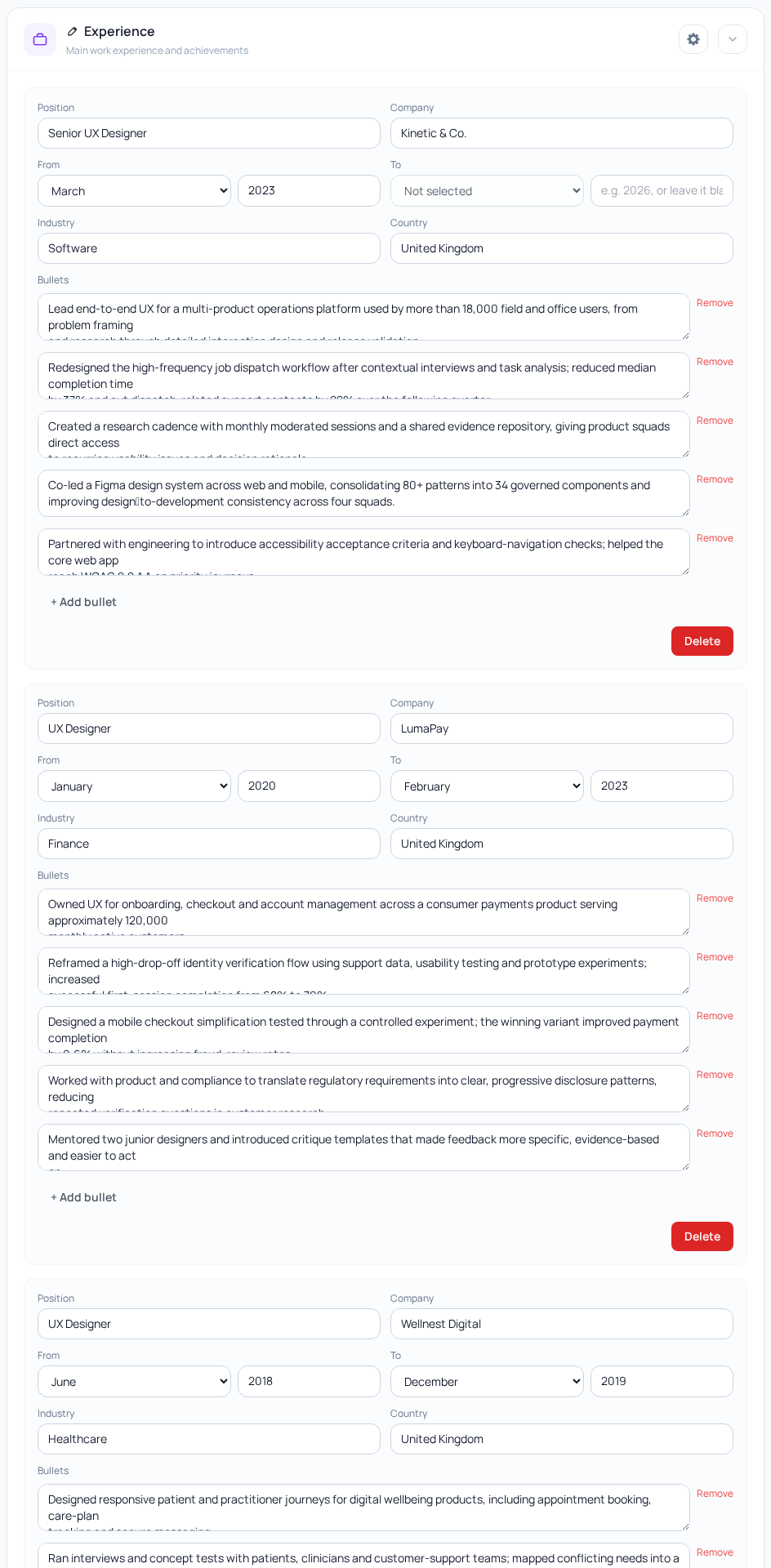
The best starting point is your master profile. In CVZilla, the profile is the reusable source for tailored CVs, so the facts need to stay accurate there first. That profile can hold experience bullets, project outcomes, skills, tools, languages, and role-title variations, which gives you a practical base for both remote and non-remote applications.
That matters because remote hiring is still role hiring. A remote filter may help you find openings, but it does not prove that your CV fits the work. If the evidence is weak, a remote label on the job ad will not fix it. Use the filter to discover roles, then make the CV prove the match.
- Lead with the actual product scope and the work you owned.
- Show collaboration evidence instead of generic remote-work language.
- Keep the factual record in one master profile before tailoring versions.
- Use remote job filters as discovery, not as a substitute for role fit.
How to show distributed collaboration across time zones without vague buzzwords
Remote collaboration is easy to claim and hard to prove. Phrases like “worked closely with global teams” or “partnered cross-functionally” are not enough on their own. They tell the reader that people were involved, but not how the work moved forward.
A clearer bullet usually names the coordination mechanics when they are real. Did you run async handoffs between product, design, and engineering? Did you write decisions down so another region could pick up work the next morning? Did you use a regular cadence to unblock a launch? Those details show how distributed work actually happened.
You do not need to overload the CV with tooling jargon. Name the tools or artifacts only if they genuinely supported the work and helped the reader understand the process. The point is to show that remote collaboration produced delivery, not just meetings. For a useful frame on distributed work itself, the International Labour Organization’s teleworking guidance is a sensible reference point.
If you want wording help, use the AI Assistant only after the source bullet is truthful and specific. In CVZilla, it can generate alternatives for a professional summary or a supported bullet, but the rewritten version should still reflect your actual responsibilities, actions, tools, and outcomes. That keeps the wording sharper without drifting into exaggeration.
- Describe the coordination mechanics: async handoffs, decisions, documentation, and cadence when they are real.
- Name tools or artifacts only when they truly supported the work.
- Tie collaboration to delivery or outcome, not just participation.
- Use AI-assisted rewriting after the source bullet is already specific and accurate.
How to present ownership, prioritization, and product outcomes clearly
Remote product manager work is judged heavily on ownership. Recruiters want to know what you controlled, what you deprioritized, and why your choices made sense. If a bullet only says you “supported product strategy,” it leaves out the judgment that makes the role credible.
A stronger bullet usually follows a simple logic: owned X, decided Y, and it led to Z. That structure helps you explain prioritization without sounding mechanical. It also keeps the outcome attached to the work, which is essential when the reader is trying to understand whether you can operate independently.
This is where the Profile area helps. It is designed as the master CV editor, so you can keep experience, project outcomes, skills, and other core details in one place. That makes it easier to separate direct experience from adjacent or transferable experience, which is important if one role was clearly product-led and another was more supporting or cross-functional.
Be careful with numbers. Metrics are useful when they are real and attributable to your work. They are not useful when they are guessed, inflated, or borrowed from team-wide results you did not drive. A clean, accurate bullet is always better than a flashy one that cannot be defended.
- Say what you owned, why it mattered, and how you prioritized trade-offs.
- Ground the bullet in project experience and outcomes from the master profile.
- Separate direct experience from adjacent or transferable experience when needed.
- Keep metrics only when they are real and attributable to your work.
Before-and-after phrasing patterns for common remote PM bullets
Weak remote bullets usually fail in one of two ways. They are either too generic, or they describe activity without showing responsibility. The goal is not to stuff in more keywords. It is to make the sentence readable, truthful, and relevant to the role.
Here are a few practical rewrites. “Worked with distributed teams on product launches” becomes “Coordinated product launch handoffs between design, engineering, and go-to-market teams across time zones, keeping decisions documented so work could continue asynchronously.” “Helped prioritize roadmap items” becomes “Owned prioritization discussions for the roadmap, balanced stakeholder requests against delivery capacity, and aligned the team on the next release slice.”
A third example: “Communicated with stakeholders remotely” becomes “Kept stakeholders aligned through written updates, decision notes, and regular check-ins, reducing confusion about scope during delivery.” None of those sentences promises a result you did not earn. They simply make the work visible.
If you are refining a summary or one supported bullet, CVZilla’s AI Assistant can generate two variants before you choose one. That is useful when you already have the facts and want clearer wording. It is not a substitute for judgment, and it should not be used to rescue a bullet that has no underlying evidence.
For a fuller approach to role matching, it also helps to start from the actual vacancy rather than a generic template. If you want a deeper CVZilla guide on this step, Start from the real job description is the better companion read.
The same principle applies to ATS-friendly writing. Clear, role-relevant wording beats mechanical repetition every time. If you want a practical framework for that balance, Tailoring without keyword stuffing explains the method without pushing you toward unreadable phrasing.
- Replace vague team language with the specific work you coordinated.
- Swap passive wording for action plus outcome.
- Keep the rewrite readable and role-relevant instead of stuffing keywords.
- Use the AI Assistant only to refine a truthful source bullet.
How CVZilla helps keep the master profile and tailored versions aligned
Remote job searches often produce several strong-looking openings at once. That is where people start losing track of what they changed, which version they sent, and what the underlying facts were. CVZilla is useful here because the master profile stays as the reusable source, while tailoring runs can be created for specific roles without rewriting the truth each time.
Job Tailoring can start from either a job link or a pasted job description, which is convenient when a remote role comes from different sources. After that, you can optimize for the specific vacancy and review the result before using it in the application process. That workflow helps you stay focused on fit instead of freehand rewriting every time.
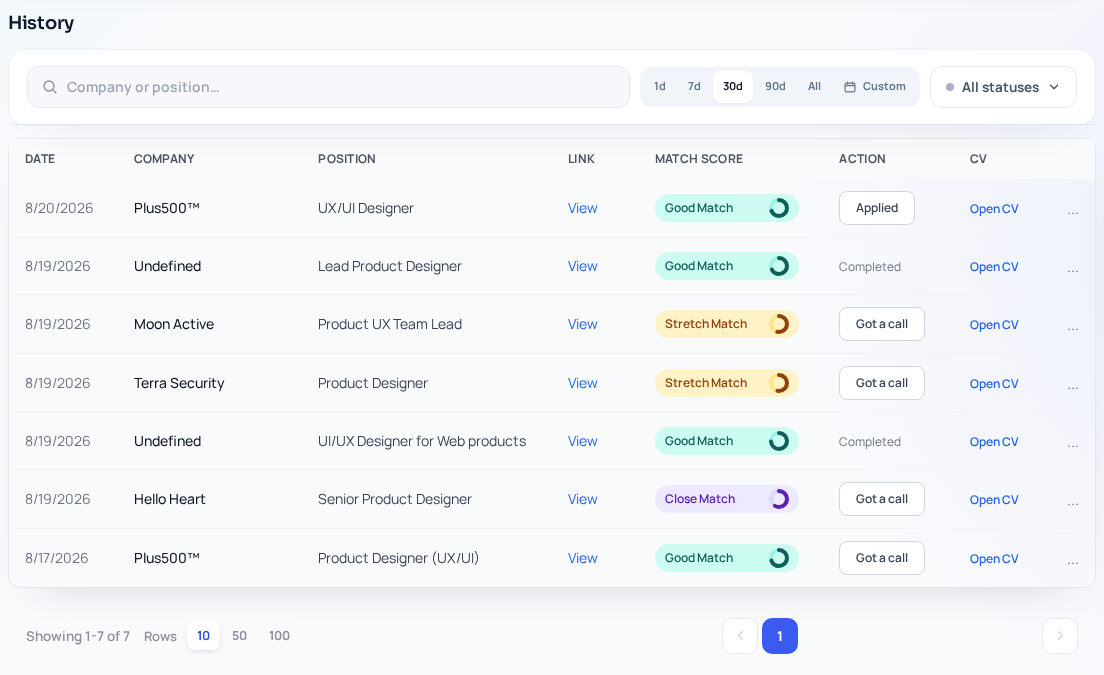
The optimization area also keeps a history of runs that you can revisit and filter by time period and status. That makes it easier to keep multiple remote-role versions organized, especially when you are applying to similar titles with slightly different product scopes. The dashboard tracking fields help you keep the search process moving without losing the record of what you already tailored.
It is worth keeping the search step separate from the writing step. Use the remote workplace filter in Jobs to find openings, then return to the profile and tailoring areas to shape the CV from the actual evidence. If you want to see the source record first, Keep one master profile current is the right place to start. If you are managing several applications, Organize tailored versions by application keeps the versions and statuses in one place.
When the master profile is current, tailoring becomes a clarity exercise instead of a memory test. That is especially helpful for remote product manager applications, where the same experience may need to be framed slightly differently for different teams, regions, or product surfaces.
- Keep the master profile current first, since it is the reusable source for tailored CVs.
- Start Job Tailoring from either a job link or a pasted job description.
- Revisit optimization history by time period and status to keep versions organized.
- Use the Remote workplace filter for discovery, while keeping the CV evidence-based.
A remote product manager CV does not need special buzzwords. It needs evidence that you can own product work, coordinate across distance, and make good trade-offs without losing clarity.
If you keep one truthful master profile current, then tailor from the actual vacancy, your applications stay faster and more consistent. That is the practical advantage: cleaner wording, less duplication, and a better chance of showing the right evidence for the role.
Keep the facts in the source profile, sharpen the language only where the evidence supports it, and let the final CV read like a confident account of how you work.