
Most CV experience bullets fail for a simple reason: they sound like job descriptions. They name a duty, but they do not show enough context for a recruiter to trust the line as evidence.
That matters because recruiters skim quickly. If your bullets are generic, they blend into every other candidate’s profile, even when the work itself was strong. The good news is that you do not need inflated numbers or flashy language to fix them. You need clearer role context, dates, scope, and a truthful outcome.
Why task-list bullets lose credibility
A duty-style bullet tells the reader what belonged to the job. A credible bullet tells the reader what you actually did inside that job, and what part of the work you owned. That difference is small on paper, but it is exactly what separates an interchangeable CV from one that feels believable.
Recruiters usually see the job title first, then the first few bullets under it. That means weak opening lines cost you more than you think, because the reader may never reach the stronger material lower down. If the first bullets read like recycled task lists, the rest of the section starts from a position of doubt.
Plain language helps. Jargon, praise words, and vague impact claims make a bullet harder to scan, not easier. A recruiter should be able to understand the line without translating it into plain English.
If a result is not measurable, do not invent one. Credibility comes from defensible detail, such as the system you touched, the team you worked with, the decision you made, or the scope of the work. The goal is to make the evidence visible, not to decorate it.
For a useful outside check on this idea, SHRM’s guidance on bringing resume job descriptions to life is a strong reminder that evidence should read as concrete work, not as copied duties, and the recruiter guidance on how resumes are read explains why the first bullets matter most.
Use role, dates, scope, and outcome as the credibility checklist
The easiest way to rewrite a weak bullet is to ask four questions: What was my role? When did I do this? What was the scope? What was the result or decision? You do not need to answer every question in full every time, but you should add enough context that the line can stand on its own.
A strong bullet often follows a simple pattern: action, context, outcome. For example, instead of writing that you were “responsible for migrations,” you can describe the type of migration, the environment, and the step you owned. Instead of “managed stakeholders,” you can show the coordination pattern, such as product updates, sign-off tracking, or change control.
Dates matter more than many candidates realize. They anchor the work in time and help the recruiter see that the experience record is current and real. That is especially important when you are trying to show a long work history without making every role look equally detailed.
The strongest rewrite is not the longest one. It is the one that adds the minimum context needed for trust. If you explain too much, the bullet stops scanning well. If you explain too little, it starts to sound like a claim without proof.
CIPD guidance on cutting the waffle from your CV is useful here: keep the facts, trim the filler, and let the evidence do the work.
Show weak vs strong rewrites without inventing proof
Weak bullets usually fail in the same ways. They use passive phrases, they hide the object of the work, or they leave out the part that makes the work believable. Strong bullets keep the truth, but add enough structure that the reader can picture the situation.
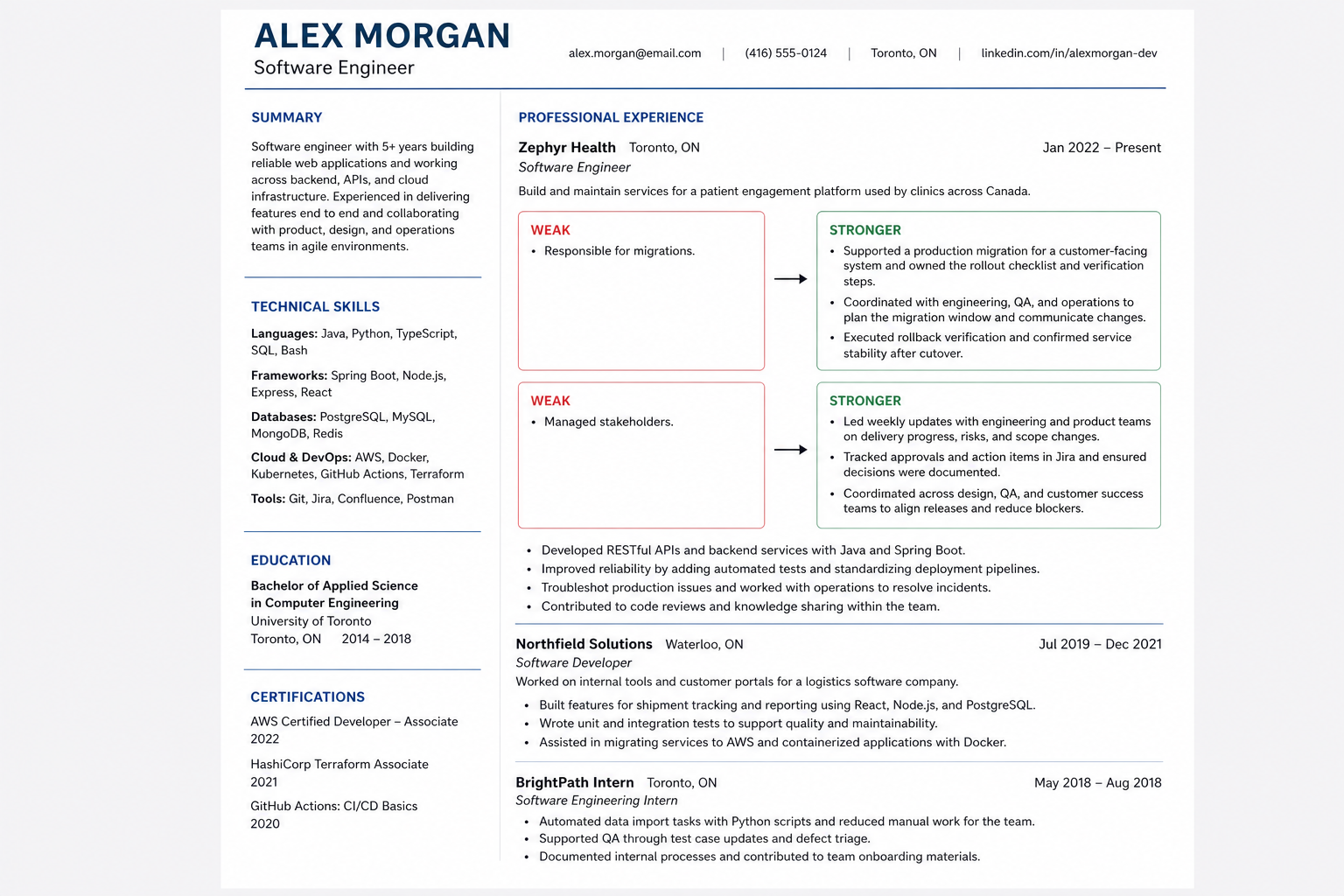
Take a line like “responsible for migrations.” That is not false, but it is thin. A stronger version might say you supported a production migration, owned the rollout checklist, or handled the rollback verification. Those details do not inflate the claim; they make the responsibility visible.
Now compare “managed stakeholders.” That phrase is so broad that it could mean anything. A more credible version might mention weekly engineering and product updates, scope changes, approval tracking, or coordination across multiple teams. The bullet becomes easier to trust because the reader can see the working pattern behind it.
Achievement wording should stay factual. Use verbs that match what happened. Avoid saying you improved, optimized, or transformed something unless you can defend that conclusion. If you cannot support a metric, use scale or ownership instead of guessing at a number.
This is the same logic behind the recruiter guidance on how resumes are read: the first few bullets matter most, so clarity beats decoration. And the clearer the bullet, the less work the recruiter has to do to decide whether your experience is relevant.
A simple before-and-after check works well here: would a recruiter understand the bullet if they had only five seconds? If the answer is no, the line probably needs more context, not more adjectives.
- Weak: responsible for migrations
- Stronger: supported a production migration for a customer-facing system and owned the rollout checklist and verification steps
- Weak: managed stakeholders
- Stronger: coordinated weekly updates between engineering and product teams and tracked scope changes through delivery
Adjust bullet depth by seniority and by how old the role is
Junior candidates often need bullets that prove they were really part of the work. That can come from internships, university projects, volunteering, or early roles, as long as the examples stay honest and specific. If experience is limited, the best strategy is to anchor each bullet in real tasks, visible deliverables, and the context that shows relevance.
Mid-level candidates should usually move one level deeper. You already have some history, so the question is not whether you helped, but how much ownership you carried. The strongest bullets should show the decisions you influenced, the systems you touched, or the teams you worked across.
Senior candidates face a different problem: too much detail can bury the current signal. Older roles often need a shorter summary so the latest years stay easy to scan. That is not hiding experience; it is prioritizing what matters most to the recruiter now.
There is no universal bullet count that works for every role. Some jobs need three strong bullets, some need five, and some need fewer for older experience. The right length depends on stage, relevance, and how much proof the recruiter needs to trust the history.
The practical test is simple. If the role is recent and relevant, keep the evidence richer. If it is older or less relevant, compress it. If you are early in your career, give the recruiter enough detail to see real work rather than padded claims. For junior framing, Manpower’s guidance on first jobs is a helpful reminder that honesty and concise, relevant detail beat empty confidence.
Put the strongest bullets first, then keep the work history current in Profile Experience
Bullet order changes what recruiters notice first. Put the strongest and most role-relevant bullets at the top of each job, because those are the ones most likely to shape the first impression. Weaker or older lines can move lower, or become a shorter summary when the role is not central to your current search.
That ordering choice matters even more when you are tailoring for a vacancy. A strong CV is not just a collection of good bullets; it is a sequence that makes the best evidence visible early. If you keep the most impressive line buried halfway down a long role, you make the reader work harder than necessary.
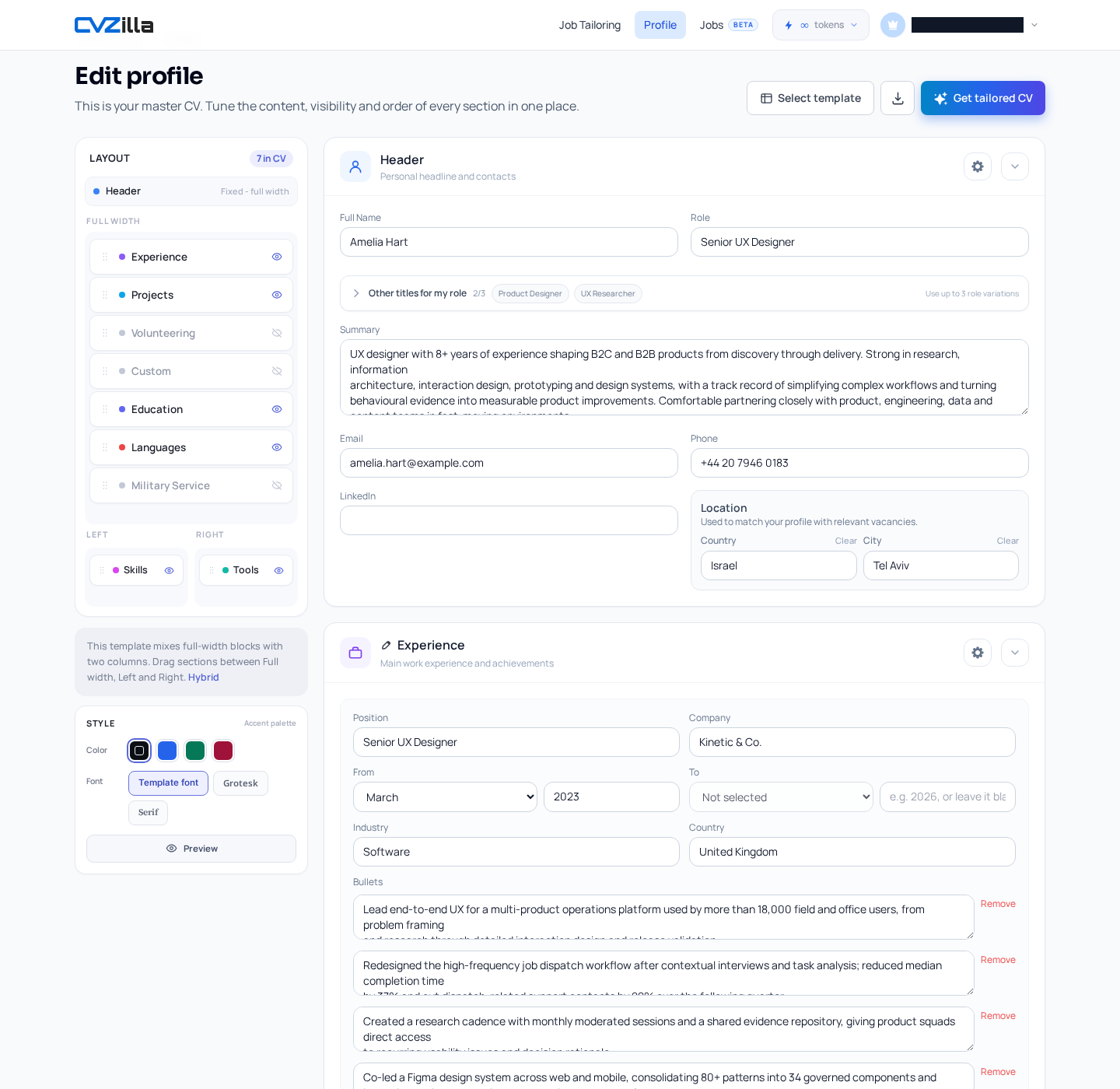
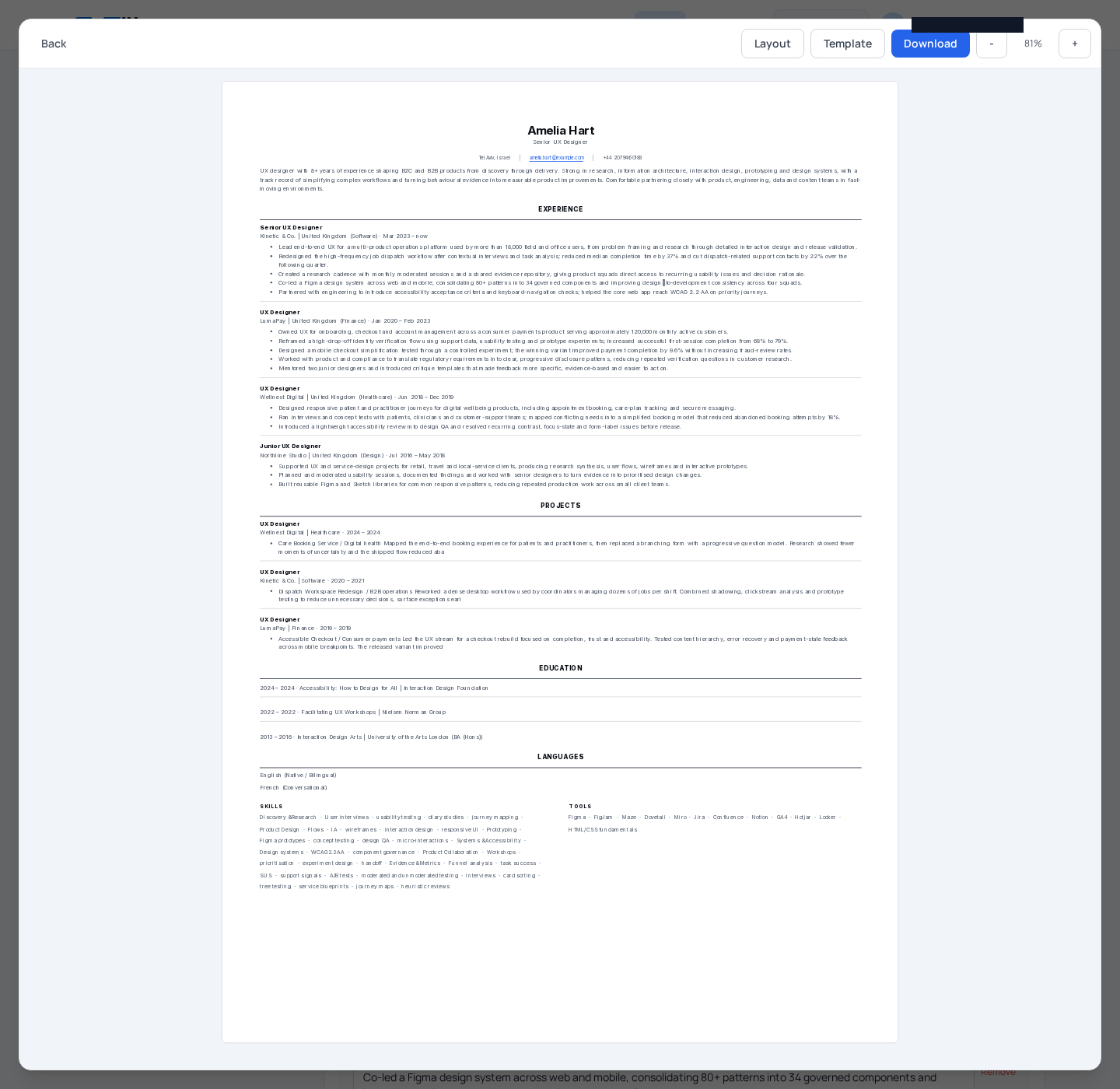
This is also where a maintained work-history record helps. In Profile Experience, you can create and edit truthful experience records with roles, organizations, dates, context, and achievement bullets, which makes it easier to keep your CV aligned with the real history.
Experience-like sections also support dated records, optional industry and country context, bullets, and AI-assisted bullet rewriting where shown. Used well, that helps you refine the wording without losing the underlying facts. The point is not to make the history sound bigger. It is to keep it accurate, reusable, and easier to tailor later.
Treat that record as the source of truth. Check every bullet against what actually happened, update it when your role changes, and use it to keep future CV versions consistent. That is the most reliable way to maintain an accurate reusable work history.
If your experience section sounds like a task list, start by adding context before you add more words. Role, dates, scope, and a defensible outcome will usually do more for credibility than another line of jargon.
Rewrite the strongest bullets first, move them to the top, and compress older roles where needed. Then keep the master record current so you are not rebuilding the truth from memory every time you apply.