A tailored CV is only useful if it is still true when you finish editing it. That is why the tailored CV editor matters: it is the last accuracy step after Job Tailoring, not a fresh starting point.
Start from a real vacancy, shape the profile toward the role, then use the editor to correct anything that now sounds too broad, too senior, or too confident. For job seekers applying across Israel and Europe, that final pass is what keeps speed from turning into overclaiming.
Why the tailored CV editor is the last check before you apply
Job Tailoring begins with a real vacancy and produces a role-focused CV, but the tailored CV editor is where you decide whether that version is actually safe to send. The master profile remains your reusable source; the tailored CV is the vacancy-specific export that still has to match your real background. That is the same source-to-version logic used in official Europass guidance on reusable CV profiles and multiple versions, which is helpful context for anyone working across European hiring markets.
That distinction matters because a polished draft can hide weak wording. If you skip the final review, you may send a CV that looks finished while quietly overstating scope, seniority, or tool depth.
The editor is also a guardrail. If a tailored result is missing or invalid, the correct move is to go back to optimization rather than force a broken version forward. Treat that as a workflow reset, not an inconvenience.
If you want the broader sequence behind this step, it helps to think of Job Tailoring as the preparation stage and the editor as the final quality control stage. The vacancy starts the process; the editor decides whether the output is honest enough to use.
What to inspect in the completed tailored CV
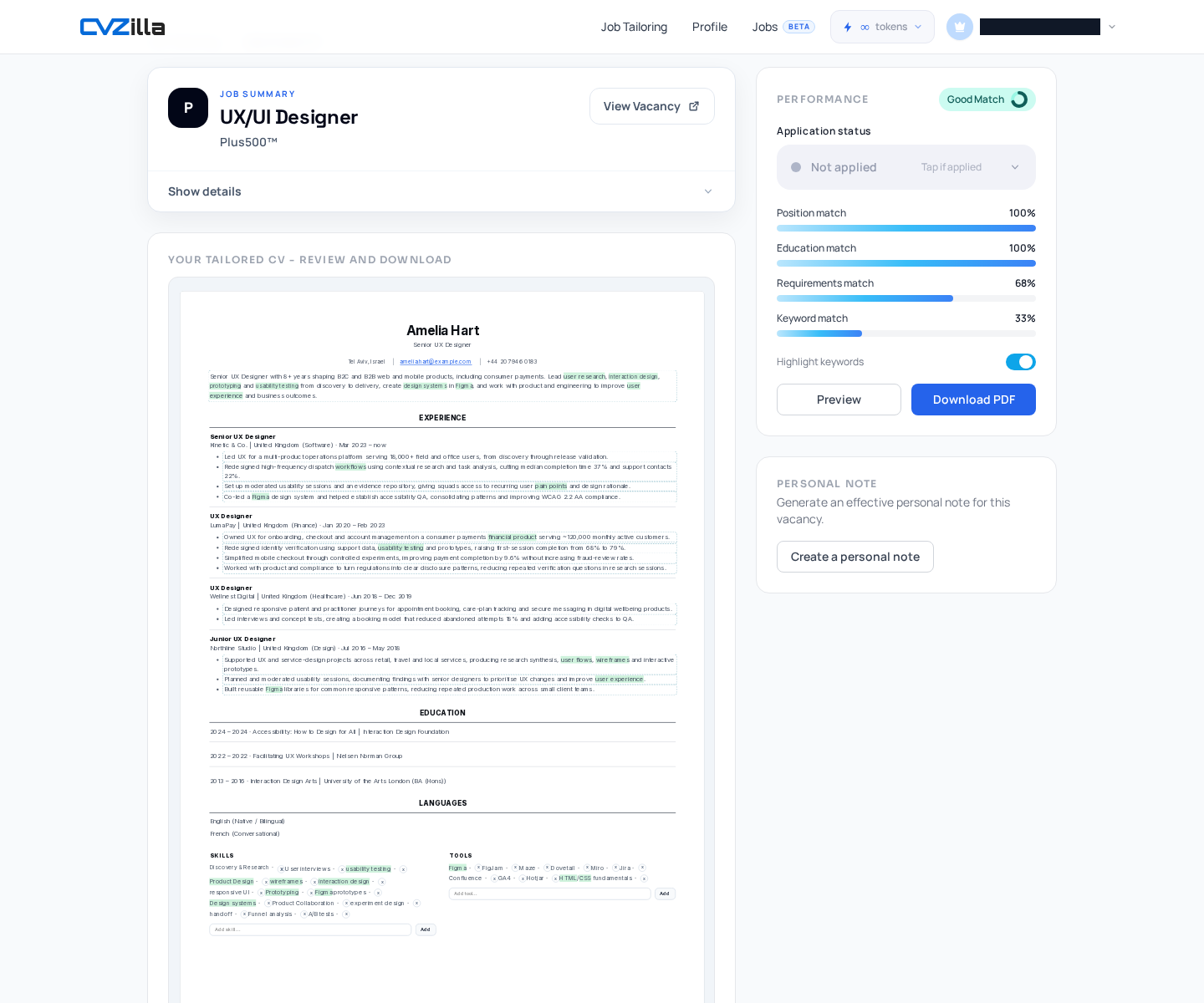
The most useful review is very specific. In the tailored CV editor, check the professional summary, supported experience or project bullets, education, skills, and tools. Those are the areas most likely to drift when a CV has been optimized for a particular role.
The summary deserves special attention because it sets the tone for the whole application. If the job asks for a senior platform engineer and the profile really supports mid-level platform work, the summary should not quietly upgrade the candidate into a different level of experience.
Experience bullets need the same discipline. Keep the factual core, then trim language that makes the accomplishment sound broader than it was. A bullet can be strong without claiming ownership of every adjacent system or process.
Skills and tools are usually the easiest place to overreach because the vocabulary is compact and easy to adjust. Add or remove chips only when the item is defensible, and use the education section to confirm that formal background is represented accurately rather than inflated.
A simple rule helps here: keep it when the profile directly supports it, soften it when the support is partial, and remove it when the evidence is not there. That approach keeps the tailored version relevant without turning it into a new story.
How requirement evidence helps you avoid overclaiming
Requirement evidence gives you a practical way to test each claim. The optimized CV context shows requirements with full, partial, or no-match labels, plus visible profile evidence, so you can tell what the tailored version is actually grounded in.
That matters because not every match is equal. Direct support can stay direct. Adjacent support should usually be softened so the wording reflects related experience rather than a claim of mastery. Unsupported claims should be removed or rewritten.
This is especially useful in high-tech roles, where tools, stacks, and seniority signals change quickly from one vacancy to another. A UX candidate who used a design tool indirectly, for example, should not leave a polished but unsafe claim in place just because it reads better. The same caution appears in guidance from the U.S. Department of Labor and SHRM: match the vacancy language, but do not turn tailoring into keyword stuffing.
The evidence view is informational, not predictive. It helps you check whether a claim is defensible; it does not promise interviews, rankings, or hiring outcomes. If you want a deeper explanation of how match signals should be read, see The final check that keeps a tailored CV honest and The vacancy is the brief: start tailoring from the real job.
Why the preview matters before you send the CV
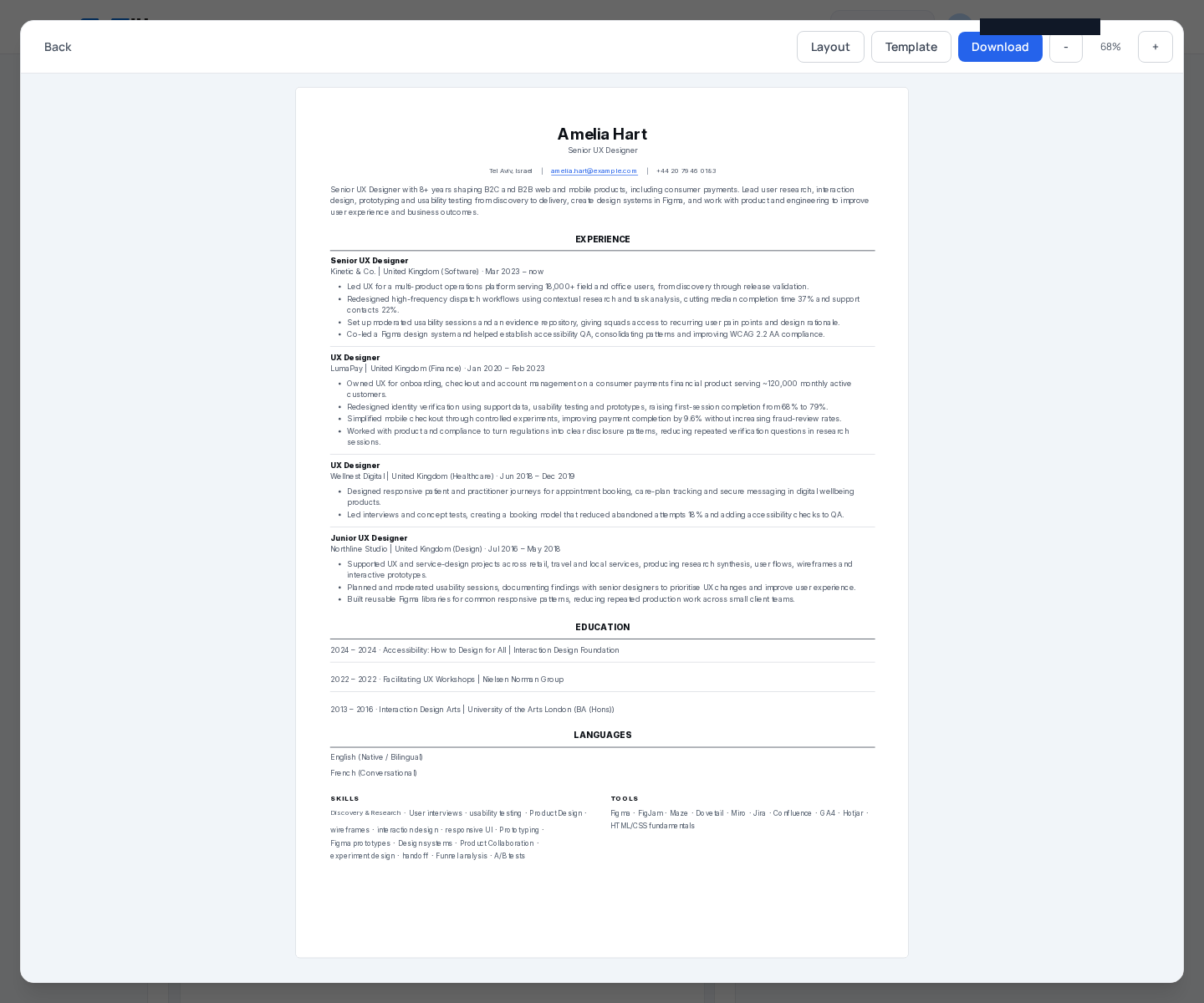
The editor is not complete until you preview the rendered CV. Preview shows the document as a reader will see it, which is the only way to check layout, spacing, readability, and whether the wording still feels natural on the page.
That final view catches problems that inline editing can miss. A sentence that looks tidy in a field may run long in the rendered document. A compact skill list may look cramped once the layout reflows. A summary that seemed precise may read too heavy when the page is fully assembled.
Preview is also where the save state matters. If you have manual changes in progress, you need to save or discard them before re-optimization, and download will save pending edits first. That makes preview the place to settle the content decision, not just admire the design.
For readers applying across Israel and Europe, the value is practical rather than theoretical. The same candidate may be sending different versions to different employers, and each one should still read cleanly, confidently, and truthfully. If you need to compare that final view with the editable profile flow, Profile preview vs tailored CV preview is the right companion read.
When to create a new tailored version instead of reusing an old one
Reusing a previous tailored CV only makes sense when the new vacancy is genuinely close. If the role, seniority, or technical emphasis changes, the safer choice is to review the version again from the vacancy and rebuild the wording where needed.
That is why the master profile should stay stable while the tailored version changes from job to job. The profile holds the reusable facts; the tailored CV editor turns those facts into a vacancy-specific document that still needs a human check.
The trade-off is simple. Shipping the same wording everywhere is faster, but it can leave you with mismatched summary language or skills that no longer fit the job. Revising the version takes a little longer, but it keeps each application relevant and defensible.
Use the evidence panel and the preview together as your decision test. If a claim no longer maps cleanly to the support you can see, or if the rendered page reads like a different role, make a fresh tailored version rather than forcing reuse. For job seekers who want the editorial direction behind this workflow, The vacancy is the brief: start tailoring from the real job shows why the vacancy should drive the final version.
A tailored CV editor is valuable because it slows you down at exactly the right moment. After the optimization step, you get one last chance to correct the summary, experience bullets, skills, tools, and education so the version you send still reflects what you can honestly defend.
Use the evidence view to separate direct support from adjacent support, then use preview to check the rendered document before download or application. That combination helps high-tech job seekers move fast across Israel and Europe without turning tailoring into overclaiming.