Most job seekers do not plan to maintain several CV files.
It usually happens after a few applications, when each role needs a small change.
One version gets a stronger summary, another gets new tools, and a third still lists old responsibilities.
Soon, nobody is sure which file is current.
That is version drift, and it creates avoidable work at exactly the wrong time.
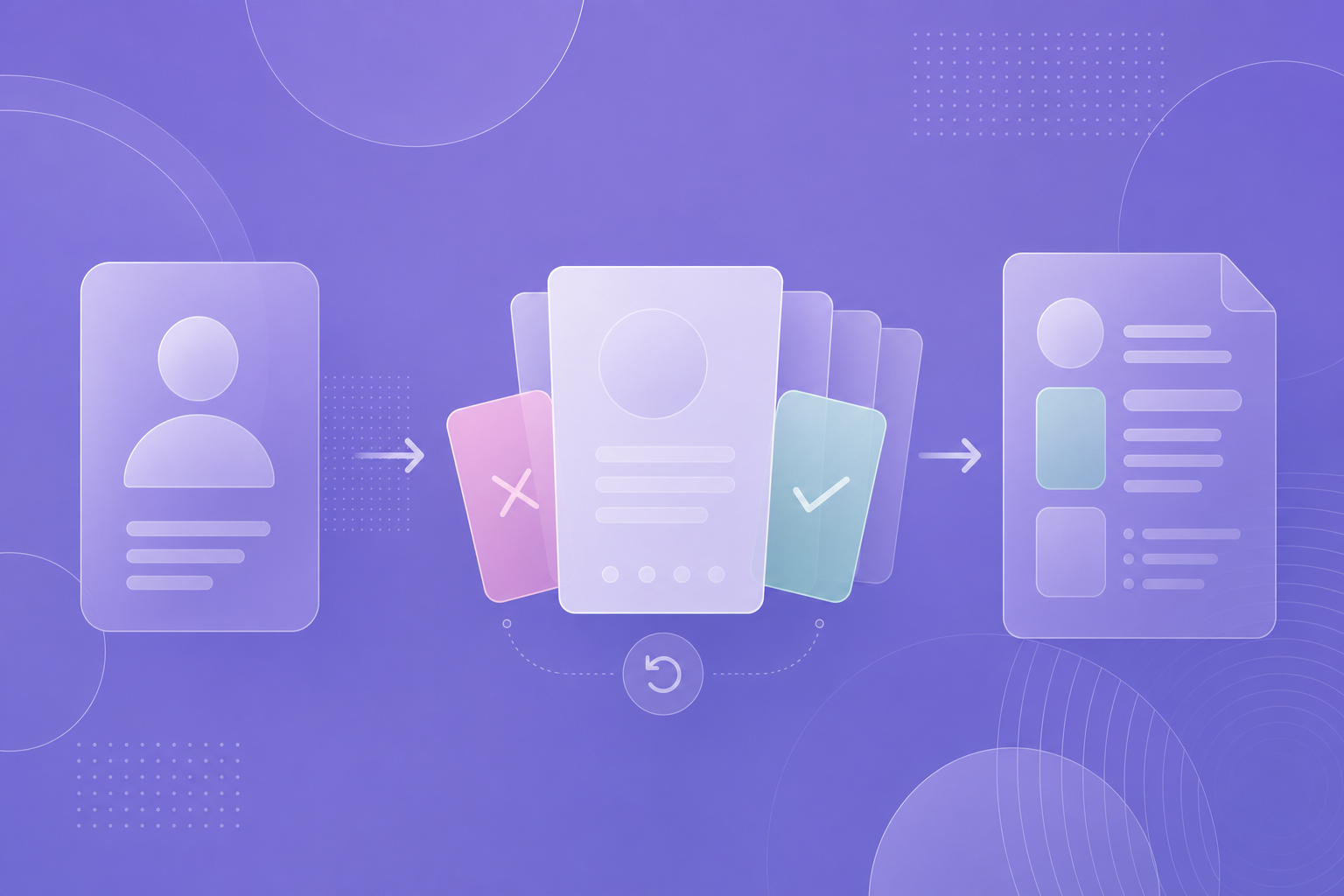
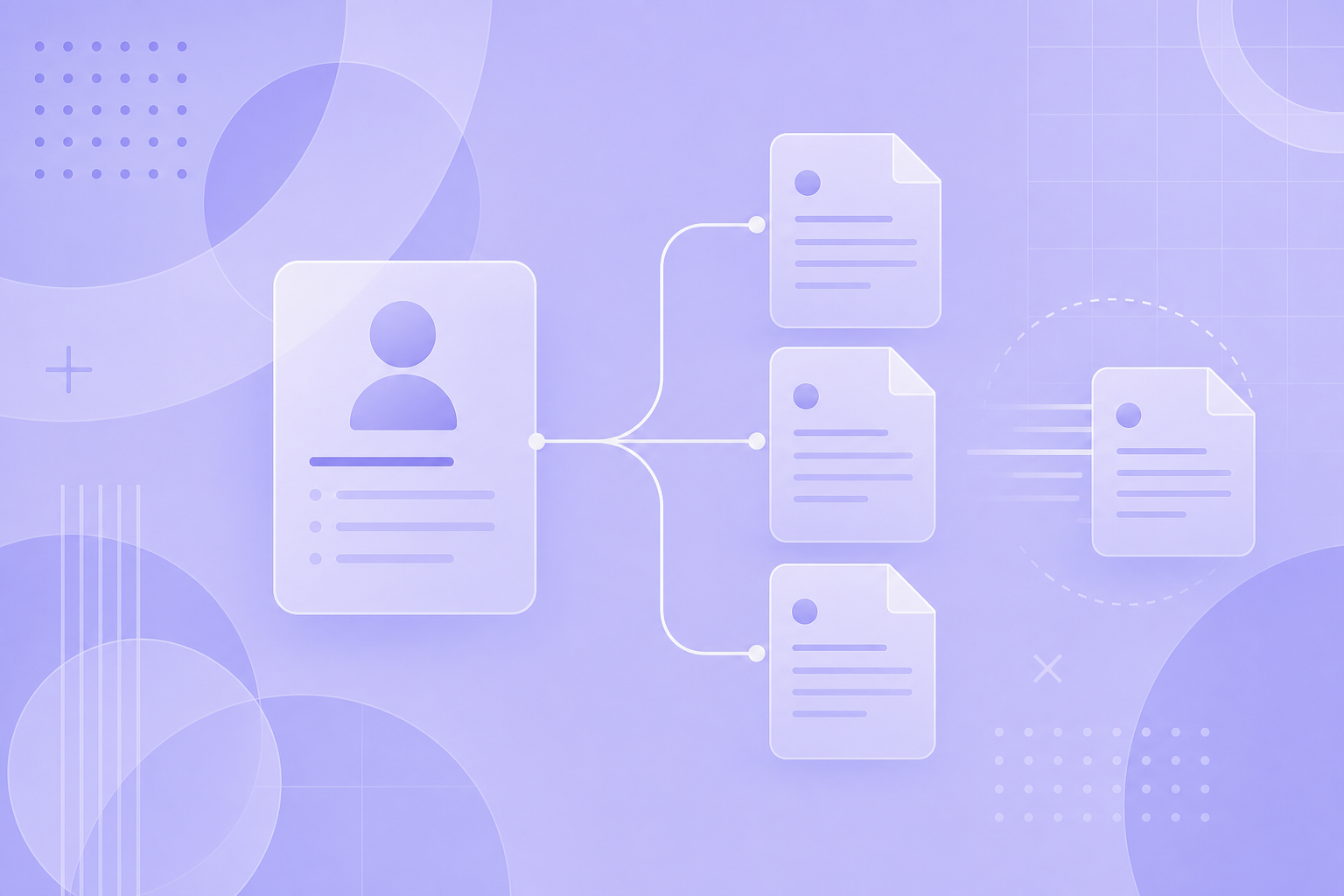
CVZilla’s answer is a profile-first workflow: keep one master Profile current, then tailor from it for each role.
That gives you one source of truth instead of a pile of competing drafts.
It also means you update your history once, then reuse it with less repetition.
If your search is getting busier, that difference matters quickly.
Why multiple CV files drift out of sync
Multiple CV files drift because updates rarely happen evenly.
You edit one document for a specific vacancy, then forget to mirror the change elsewhere.
The next time you apply, you need to check which file is actually current before you can use it.
That extra checking slows you down and adds uncertainty.
It also increases the chance that an older version slips into an application.
The more files you keep, the more mental bookkeeping the job search demands.
A maintained single profile avoids that repeated comparison work.
You update the facts once, then reuse them in later applications.
That is the practical value of keeping one current record instead of several separate files.
It keeps your career history in one place, where it is easier to review and easier to trust.
When applications start arriving faster, that simplicity becomes a real advantage.
- One edit in one file rarely reaches the others on its own.
- The more versions you keep, the more time you spend checking consistency.
- A single source of truth reduces repeated rewriting before each application.
What belongs in one master profile
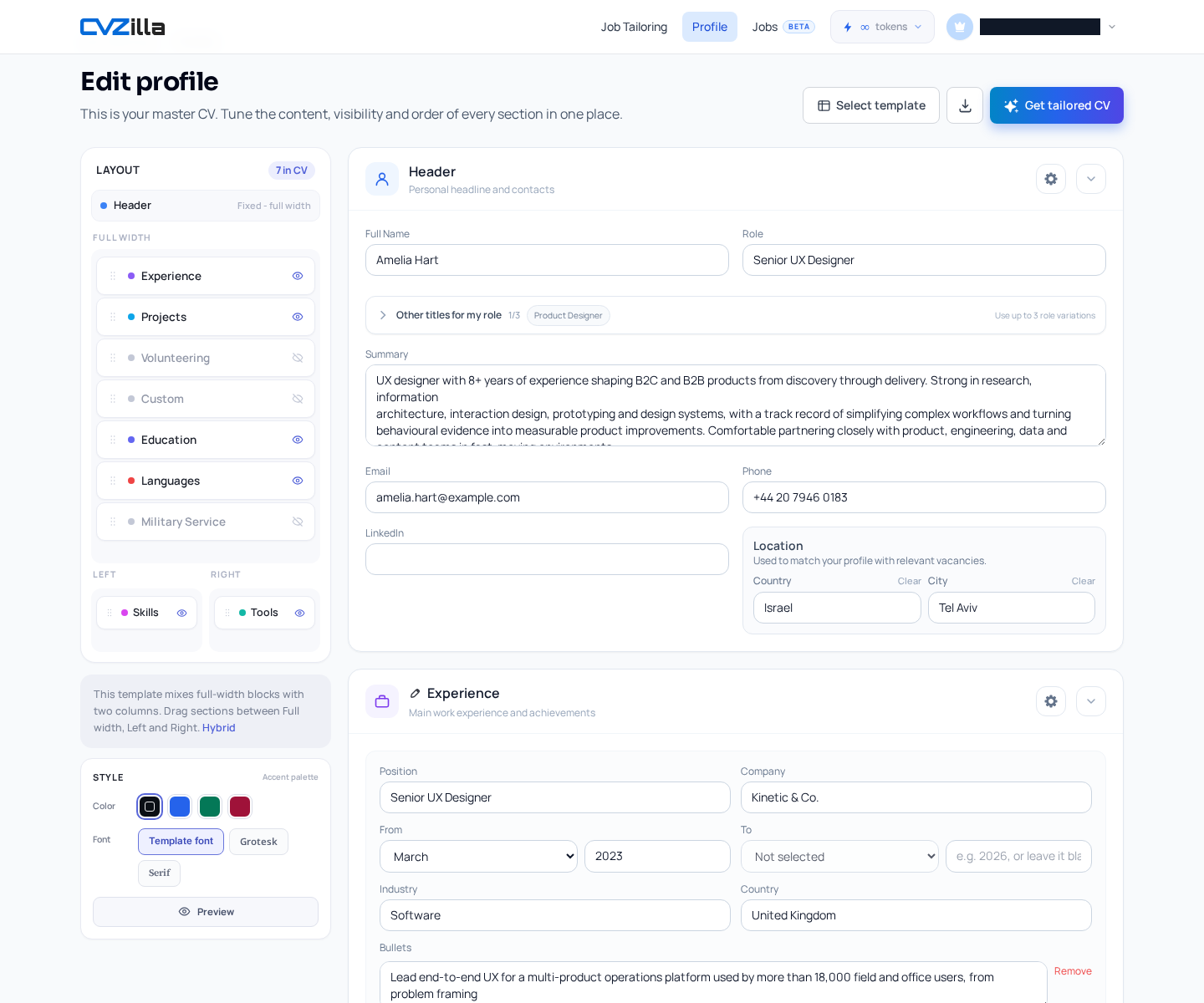
CVZilla’s Profile is the master CV and reusable source of professional facts.
It is the place to keep the information you do not want to rewrite from scratch.
That includes your headline, role variations, summary, contact details, location, work history, projects, education, skills, tools, languages, and extra sections.
It also supports template choice and presentation controls, so the same core record can feed different outputs.
The point is not to stuff everything into one document without judgment.
The point is to keep a reliable base that can support later tailoring.
If you already have a CV, you can start by importing it into CVZilla.
If not, you can create a profile manually and build it up from there.
Either way, the goal is the same: one maintained record before tailoring begins.
That is why the master profile works well as a source of truth.
It is broad enough to preserve useful experience, but structured enough to edit efficiently.
If you want to see the source-of-truth idea in the product, open the Profile workspace.
If you are starting from an older file, read What Happens When You Import an Old CV into CVZilla.
- Keep reusable facts in one place.
- Treat the profile as the master record, not a finished application.
- Use import or manual setup to create the base profile.
What gets easier when applications start from one profile
The biggest gain is simple: every new job starts from the same current record.
That means you are not rebuilding your career history for each vacancy.
Instead, you are shaping one reliable profile into a role-specific version.
CVZilla’s Job Tailoring flow starts from that master profile.
It is designed to prepare a focused CV from current facts, then let you review it for accuracy.
That matters because job search pressure often pushes people to move too fast.
A profile-first workflow gives you a cleaner starting point and less repetitive work.
It also helps when applications stack up in a short period.
You spend less time retyping old information and more time deciding what matters for this role.
Jobs can also use profile relevance sorting for signed-in users with a profile.
That connects a maintained profile to job discovery as well as application prep.
For the tailoring step itself, Job Tailoring begins from the profile you maintain.
And before you send anything, use The Final Check That Keeps a Tailored CV Honest.
That final pass is easier when the base profile is already current.
- One current profile speeds up each new application.
- Tailoring begins from the same source of facts every time.
- Profile relevance can help connect your profile to job discovery.
How tailoring reuses your history without rewriting it
A master profile does not mean one identical CV for every job.
It means one accurate base, then deliberate tailoring for each vacancy.
CVZilla’s recommended flow is clear on that point.
Keep the source reliable, then shape the output to the role.
That keeps the process truthful and practical.
It also keeps your effort focused on relevance, not duplication.
Safe profile writing helps here.
Describe real responsibilities, decisions, actions, tools, and outcomes.
Use concrete evidence instead of vague claims.
That keeps the profile useful when you need to adapt it later.
It also helps you avoid building a profile that is too narrow to reuse.
A broad, accurate record gives you more room to emphasize different parts of the same history.
After tailoring, review the result carefully.
Correct anything that overstates your background or skips an important detail.
That final review protects accuracy and keeps the application honest.
A useful standard is to ask whether each line could be defended in an interview.
If not, refine it before sending.
That approach works well with the profile-first workflow, because the base history stays intact while the emphasis changes for the vacancy.
For a broader look at how the job brief should shape the final document, see The final check that keeps a tailored CV honest.
If you want a clearer picture of role requirements, O*NET OnLine can help you compare job language with your own experience.
That kind of comparison is useful when you are deciding what to emphasize, not what to invent.
- Tailoring should change emphasis, not invent history.
- Use specific evidence from real work.
- Review each tailored CV before applying.
A simple upkeep rhythm for staying current
The easiest upkeep habit is also the smallest one.
Refresh the master profile whenever your responsibilities, tools, projects, or focus change.
Do not wait for a perfect overhaul.
Small updates are better than long gaps.
Keep the record broad enough to hold useful experience, then tighten it as your search evolves.
That makes the next application faster.
It also reduces the chance that an old file becomes your default again.
CVZilla saves profile edits automatically through queued updates.
There is no page-level Save button.
That means your job is to keep working in one place and let the profile stay current as you go.
Only one browser tab can edit the profile at a time, so a single-tab habit is the cleanest way to avoid friction.
If you tend to revise your CV after every interesting vacancy, pause and update the profile first.
Then build the tailored version from that refreshed base.
Open the Profile, update the facts that changed, and keep that one source current.
When the master stays current, every future draft starts in a better place.
That is the simplest way to keep your job search organized when the pace picks up.
It also makes it easier to spot what has changed since your last application.
The result is less rework, fewer contradictions, and a clearer record of your career.
You keep the same history, but you present it with better control.
- Update the profile when your work changes.
- Do not rely on scattered files as your default source.
- Use one editing session and keep the master current.
If your job search is getting busy, the simplest system is usually the best one.
Keep one master profile current, and let everything else come from that source.
You will spend less time reconciling files and more time preparing strong applications.
That is the value of a profile-first workflow.
Open your Profile and keep it current.