
A job posting is not a to-do list, and it is not a resume template. Most job seekers read one, highlight a few phrases, and still finish without a clear decision.
The better move is to turn the posting into a short job application checklist: what is required, what is preferred, what you can prove, and what still needs follow-up. If you want a broader read on the role before you tailor anything, start with How to read a job description like a hiring team. Then use the checklist to decide whether the job deserves more of your time.
Start with the real problem: notes are not a decision
Most people stop at notes because notes feel productive. But a sticky-note pile is not the same thing as a decision. The point is to turn one posting into a simple yes, no, or not yet.
Treat the job description as evidence about the role, not text to copy mechanically. If the job details in Jobs show responsibilities, requirements, nice-to-haves, or visible match labels, use those signals to sort the buckets faster. For a neutral reference on tasks and skills, O*NET Online can help you compare the wording in one posting with a broader occupation profile. That is useful when the ad is vague, but it should not replace the job-specific facts you still need to prove.
- Read for decision, not for decoration
- Treat the posting as evidence about the role
- Stop once you know whether the role is worth more time
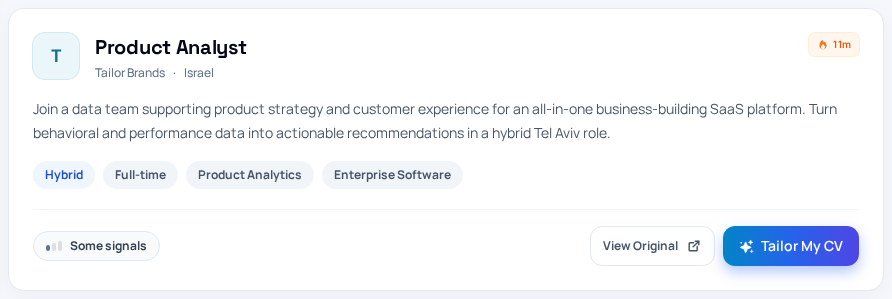
Break the job into must-haves, nice-to-haves, proof points, and open gaps
Split the posting into four buckets: must-haves, nice-to-haves, proof points, and open gaps. If you need help spotting what is actually missing, Find missing resume evidence before you apply is a good companion.
Must-haves are the non-negotiables. Nice-to-haves are useful only after the core is covered. Proof points are real examples, outcomes, or responsibilities you can stand behind. Open gaps are missing proof, missing language, or a mismatch that makes the role a poor use of your time.
- Must-haves are the skills, tools, or experience you need before applying
- Nice-to-haves matter less than the core requirements
- Proof points should come from real experience, outcomes, or projects
- Open gaps should be marked clearly so you can decide whether to continue
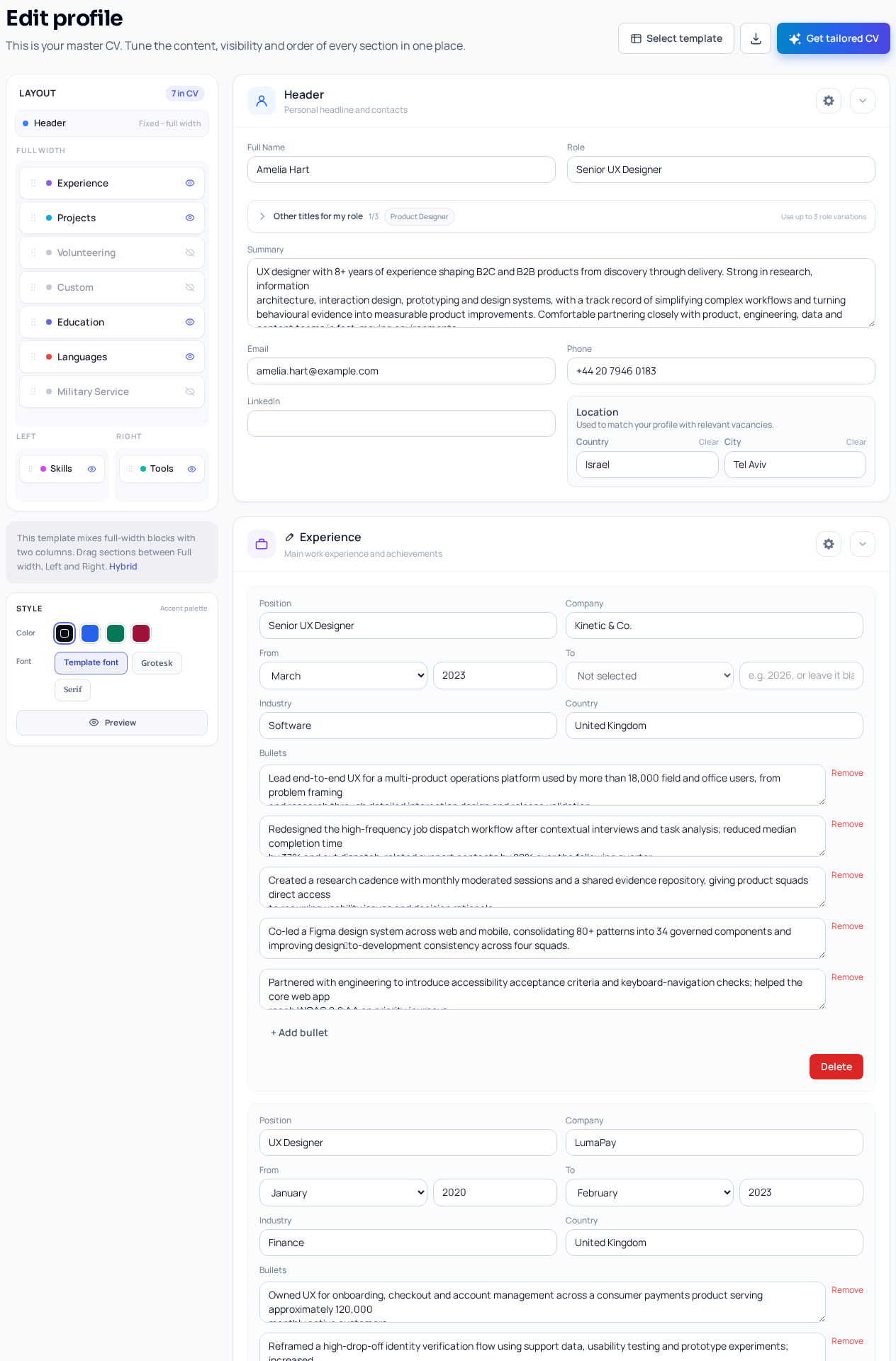
Use the Profile as the source of record
Your Profile is the source of record. Keep the master CV honest and current, then map each requirement to a work experience, project, education item, skill, tool, or language you can actually stand behind.
Use supported, adjacent, and unsupported as your honesty filter. If something is only adjacent, say so in your notes. If it is unsupported, leave it out rather than stuffing your resume with borrowed keywords. That is the safer way to handle ATS-sensitive language too: use the role's wording only where your own profile can support it. From there, open Job Tailoring with the job link or pasted description, draft the role-focused version, and review every line before you use it.
- Keep one master CV accurate in Profile
- Map each requirement to proof you can defend
- Mark adjacent claims as adjacent, not identical
- Leave unsupported claims out of the tailored draft
Turn the checklist into application actions
Now turn the checklist into actions. Matched items become resume edits only when the evidence is real and relevant; open gaps become cover-note notes, interview prep, or a decision to skip the role.
In Jobs, you can move from discovery to tailoring once the checklist says the role is worth the effort. That keeps the work on the vacancy card, original posting, and tailored draft in one path instead of scattered notes.
- Resume: adjust summary, titles, bullets, or skills only for real matches
- Cover note: explain the strongest matches and any honest limits
- Interview prep: turn weak spots into examples and follow-up questions
- Skip: if a must-have is unsupported, save the time and move on
A good job application checklist is short, honest, and specific. It should tell you what the role requires, what you can prove today, and what still makes the application uncertain.
When you keep your Profile accurate, use Job Tailoring from a real vacancy, and refuse to pad the resume with unsupported claims, you get a clearer process and a cleaner decision. No checklist can guarantee a reply, but it can keep you from spending time on a weak fit. Open Job Tailoring when you are ready to turn a job description into a truthful, role-focused plan.