If you moved to the UK from another country, your machine learning experience does not need to be rewritten from scratch. It does need to be reframed so a UK recruiter can scan it quickly and understand what you actually built, owned, and improved.
The biggest mistake is turning the CV into a relocation story. A stronger approach is to keep one truthful master profile, translate overseas work into clear evidence, and then tailor that source record to each vacancy without inventing anything.
That is also where CVZilla is useful: it gives you one master Profile, lets you bring in an old CV if you already have one, and then helps you review both the source version and the tailored version before you apply.
Why UK hiring norms change how a machine learning engineer CV is framed
UK CVs are usually read fast. That means the document has to lead with relevance, not with the full story of how you moved countries. The goal is not to hide context; it is to reduce the amount of translation the recruiter has to do.
For a machine learning engineer, the real shift is from project narrative to delivery evidence. Instead of describing a model in broad terms, show what problem it solved, what you owned, what tools or systems were involved, and what changed because of your work.
Keep immigration status, nationality, and other personal details out of the CV unless a separate field or application step explicitly asks for them. Right-to-work checks are handled separately in the hiring process, and applicant data can be collected in recruitment paperwork rather than on the CV itself.
This matters even more if a move to the UK created a small chronology shift or a gap. A brief factual explanation is usually enough. Overexplaining the move can make the CV longer, less focused, and less convincing.
For a practical benchmark, the CIPD guidance on keeping CVs tight and specific is useful, as is GOV.UK’s guidance on recruitment fairness and right-to-work checks. The underlying lesson is simple: your CV should help the recruiter evaluate your work, not your migration story.
Start from one truthful master profile after moving from another country
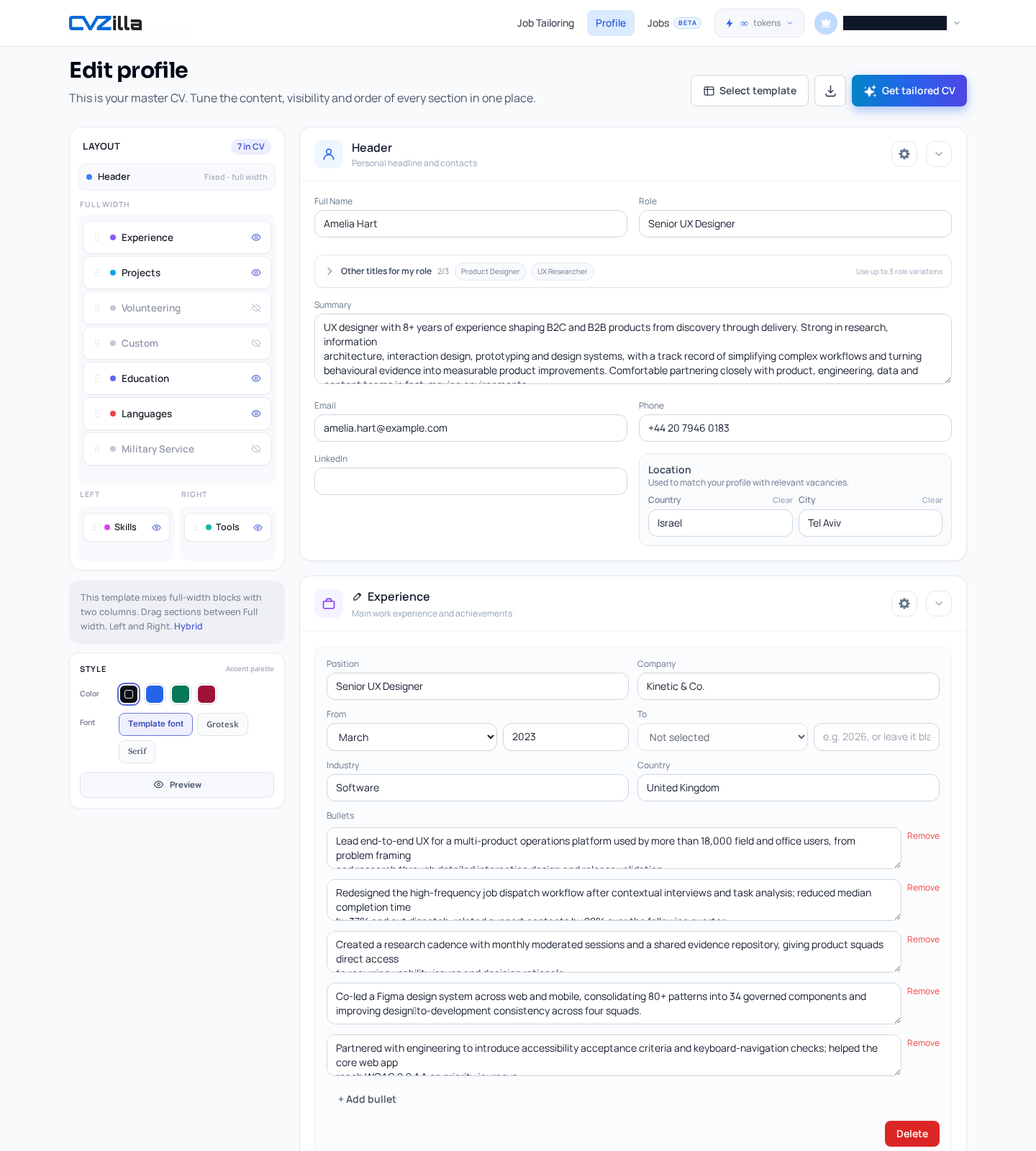
The safest base is one master profile that holds the truth once, in one place. In CVZilla, the Profile area is that reusable source record, and it can hold your headline, summary, experience, projects, education, skills, tools, languages, and presentation choices before you tailor anything for a job.
If you already have an old CV, treat it as a draft, not a finished answer. The import flow can create a profile from an existing file, accept PDF, DOC, or DOCX, show extraction progress, and translate non-English content into English.
That matters because imported content often carries old habits with it: a different CV structure, outdated wording, or claims that made sense in another market but are not obvious in the UK. The right move is to clean the draft once, confirm that every claim is defensible, and then use that as your master profile going forward.
A good practical rule is to update the master profile soon after arrival in the UK so it reflects your real current situation. That does not mean adding unnecessary personal details. It means making sure the source record is accurate, recent, and ready to reuse whenever you apply.
Once the master profile is in good shape, the rest becomes easier. Every application starts from the same truthful base, so you reduce drift, protect the facts, and avoid rewriting your story from scratch each time.
Translate overseas ML work into UK-readable evidence of scope, tools, deployment, and impact
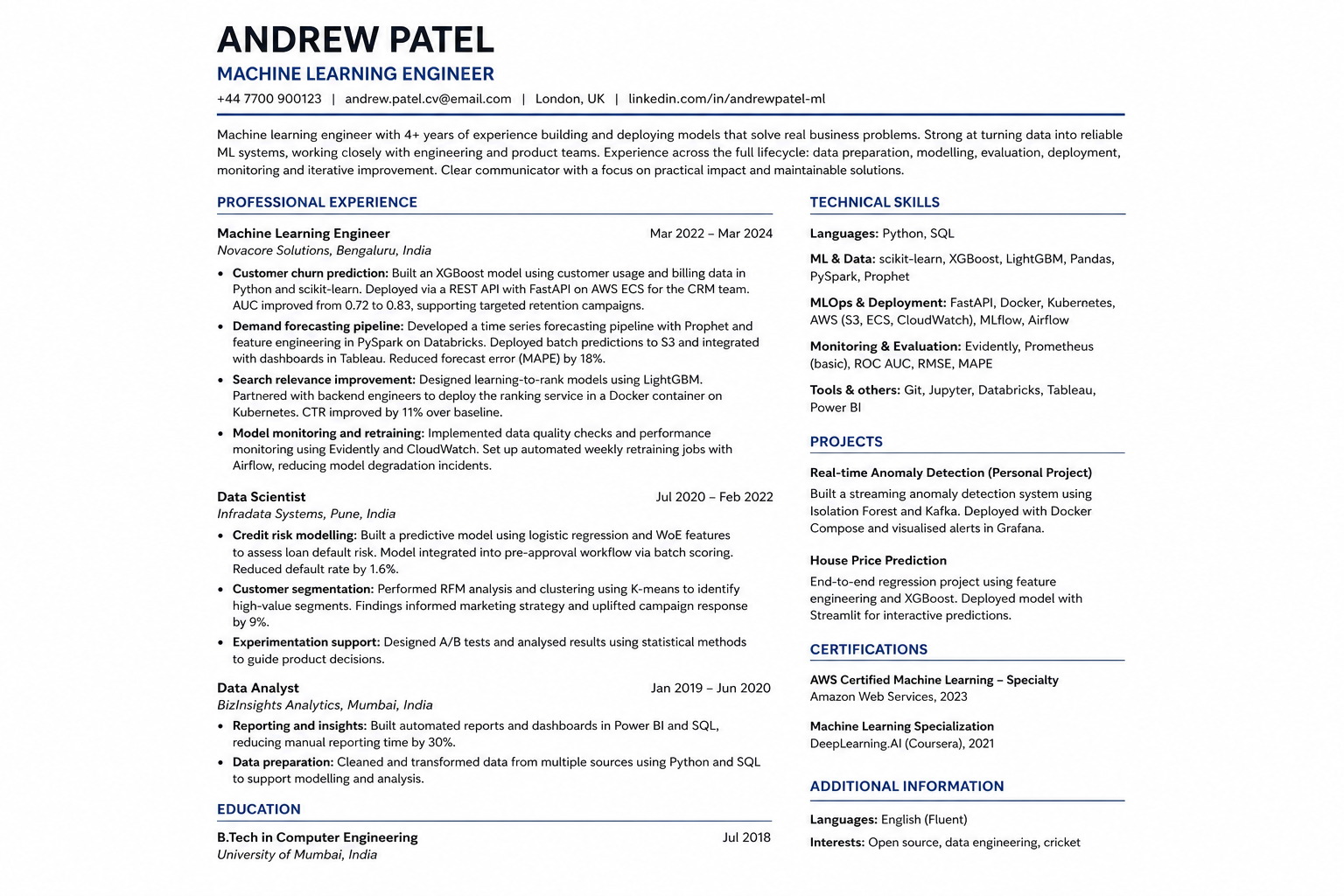
The most useful translation trick is to write each bullet in the same order a recruiter processes it: problem, system, context, outcome. That format turns technical work into something a UK hiring manager can understand in seconds.
For machine learning engineering, the occupational focus is not just experimentation. It also includes productionizing models, deploying them, monitoring them, retraining them, and improving them over time. So if your actual role covered feature engineering, evaluation, handoff to engineering, or deployment support, say that clearly.
That distinction matters because many overseas CVs over-index on project themes or algorithm names. A UK-readable CV is stronger when it shows ownership and operating context: what you built, what tools or systems you used, how the model lived in production or pre-production, and what result followed.
This is also where honesty protects you. Do not invent scale, metrics, or tool stacks to make the profile look more local. If your work was exploratory, write it that way. If it was adjacent to production rather than directly responsible for it, say so.
A concise source profile helps the rewrite work. The recruiter should be able to see scope and relevance without having to mentally translate your old market’s style of CV.
For broader occupational context, the machine learning engineering description on O*NET is useful because it frames the work around design, productionization, deployment, monitoring, and improvement. The key caveat is that this is a job description of the occupation, not permission to claim every part of it.
Align structure and details with UK recruiter expectations without overexplaining the move
Most UK-facing CVs work best when the structure is lean: summary, recent experience, selected projects, education, skills, tools, and languages are usually enough. That structure gives the recruiter a clear route through the evidence and keeps the relocation story from swallowing the page.
If your move to the UK created a date shift or a short gap, keep the explanation brief and factual. The right goal is to prevent confusion, not to build a narrative around the transition.
There is also a useful decision rule here: keep the most role-relevant proof high up, and trim anything that does not help the vacancy judge fit quickly. For an immigrant machine learning engineer, this often means moving the strongest delivery evidence closer to the top and reducing older or adjacent material.
Be careful with section length. Concise does not mean thin. If you remove too much, the CV stops proving anything. If you keep too much, the reader has to work too hard.
If you are wondering how much to explain about breaks, relocation, or chronology, the safest answer is: just enough to be clear. The final check before you send a tailored CV is a useful reminder that the last pass should be about mismatch, relevance, and truthfulness rather than adding more context.
That same boundary keeps the application clean. The CV should not carry nationality, visa-status explanations, or other unsupported personal details unless the employer separately asks for them.
Tailor the same source profile to a specific vacancy without stretching the truth
Tailoring should start from the truthful master profile, then adjust ordering, emphasis, and wording for one vacancy. The job description is a filter for relevance, not permission to copy its language or add skills you cannot back up.
In CVZilla, Job Tailoring starts from a job link or a pasted job description, so the vacancy can guide what stays visible and what gets pushed down.
The best method is simple: map each must-have in the vacancy to one real proof point. If the role asks for deployment experience, show where you genuinely contributed to production. If it asks for experimentation, evaluation, or ML pipeline work, keep those parts visible only when they are truthfully supported.
This is where applicants sometimes go wrong after moving countries. They try to make the CV sound more local by mirroring the job ad too closely. That can make the document feel generic and can also create claims they cannot defend later.
The safest tailoring rule is to leave unsupported items out. The vacancy may mention them several times, but repetition in the job ad is not evidence of your experience.
If you want to see how CVZilla positions the vacancy-based workflow, Job Tailoring is the place to start from a real role. The goal is the same truthful record, framed for a specific application.
Check the rendered master and tailored previews before sending the application
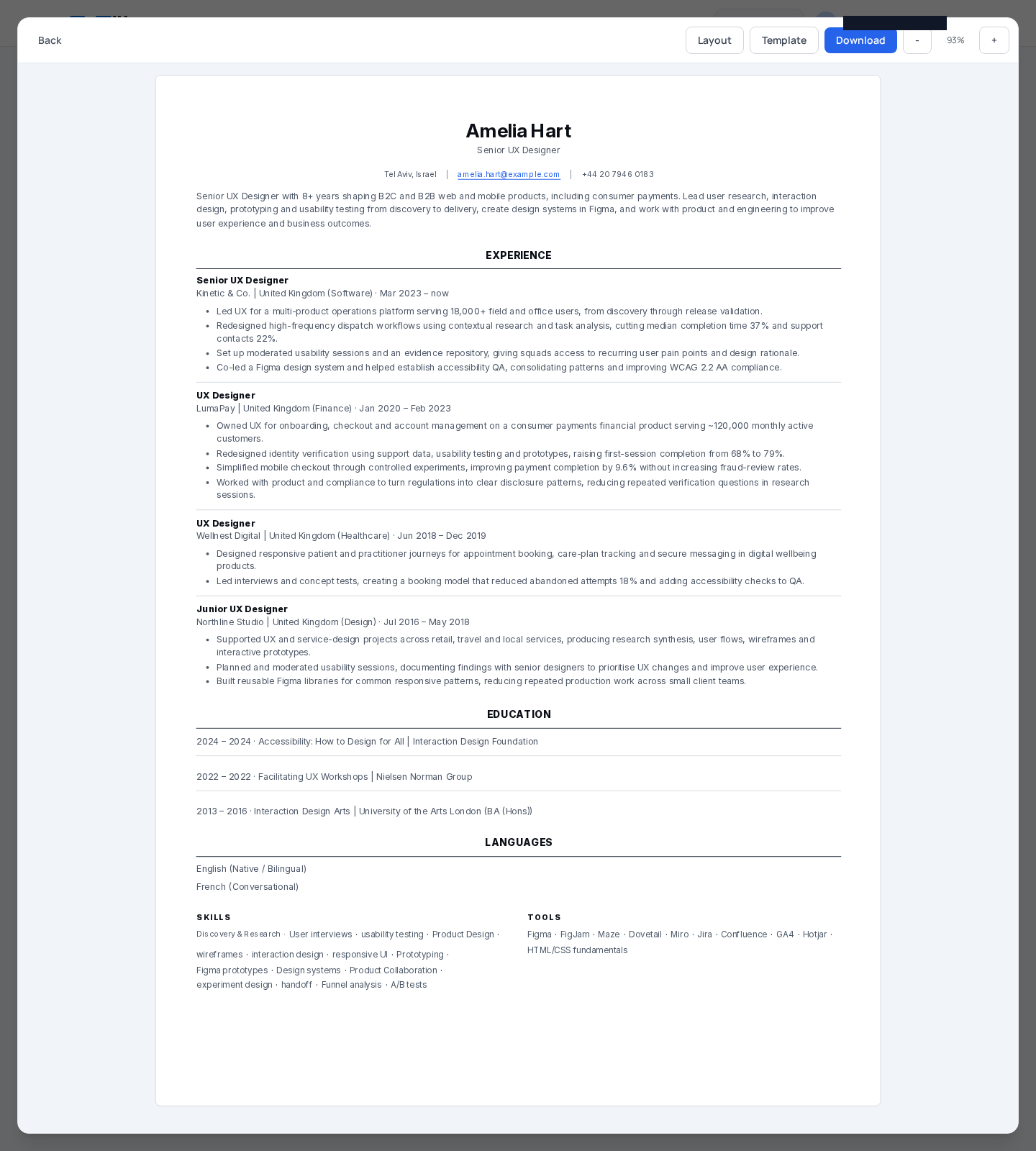
A good CV process does not end when the text is drafted. It ends when you see how the profile actually renders. The master preview is important because it shows the reusable source record as a finished page, which is the best place to catch wording problems before any job-specific version is created.
Then check the tailored preview. The rendered application-facing result is where relevance problems usually show up, especially after moving from another hiring culture. You want to verify the headline, the most important bullets, the chronology, and any wording that changed during tailoring.
CVZilla’s live tailored CV page makes the finished result available for review with preview and download controls visible, so the last step is not guesswork. You can inspect the output before you use it, which is exactly what you want when you are balancing international experience with UK hiring norms.
The most useful habit is to compare the master version and the tailored version against the vacancy. Ask three questions: does the role-relevant evidence stay visible, did any unsupported detail slip in, and is the CV still easy to scan? If the answer to any of those is no, revise before submitting.
This final review is about honesty and clarity, not guarantees. A preview can catch mismatch and overstatement, but it cannot promise ATS success, interview success, or a job offer.
The simpler your source profile, the easier this check becomes. That is why the whole workflow starts with one truthful master record and ends with a careful review of the rendered versions before you apply.
A strong machine learning engineer CV for the UK is not a translated autobiography. It is a concise, evidence-led document that shows what you delivered, what you actually owned, and why that work matters for the vacancy.
If you moved from another country, the safest path is to build one truthful master profile, clean it once, tailor it carefully, and review both the master and tailored previews before you send anything.
Open your Profile, make the source record honest and current, and then tailor from there with confidence.